
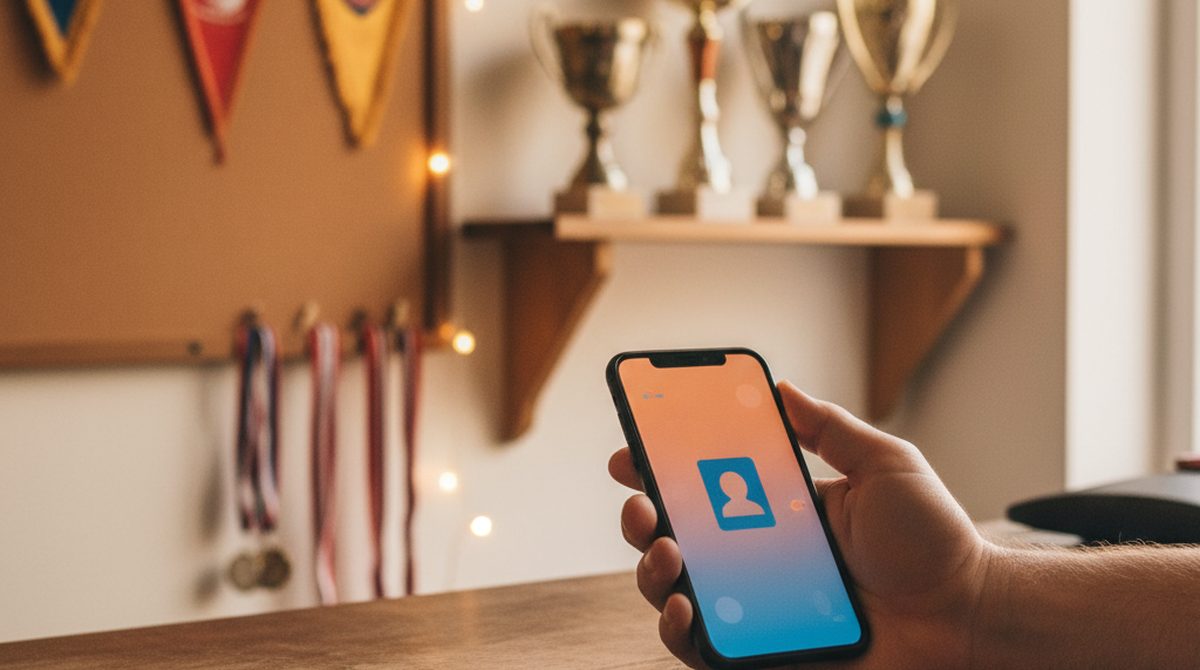
Board meeting at the sports club, Thursday evening, fifth half-hour. Item seven on the agenda: reprinting the membership cards. Third time in five years. The old cards look like old cards — worn, some bent, several lost. The treasurer does the math: 200 members, about $2 in printing per card plus shipping, plus the hours someone has to put in to organize the whole thing. And we'll be doing it again in two years.
Someone asks if there's a digital version. Silence. Then we spend 20 minutes debating whether this is a good idea, whether grandma in row three has it on her phone, whether the photo on a screen counts, whether GDPR has anything to say. In the end the motion passes — and we try it. The wallet pass for the club.
Why Club Cards Disappear So Reliably
If you've ever handed a membership card to a 12-year-old, you know what happens. The card ends up:
- in a sports bag among the wet clothes
- in a pocket that gets washed
- in a locker the custodian empties three weeks later
- with a friend who "had it for a sec" and never gave it back
My rough sense: with kids and teens we lose around 15 percent of the cards each year. With adults the number is lower, but inquiries still come in regularly — wallet lost, card not where it should be, coach asking again.
Each loss is a mini-process: email to the board, order with the print vendor, mail or hand-off at training, new entry in the membership database. Multiplied by 200 members, this becomes a noticeable share of the volunteer work.
What a Club Card Actually Has to Do
We sat down with the board and listed it out. A membership card for a normal sports club has to deliver:
- Member ID. Unique, often matching the federation player ID.
- Name and possibly a photo. So at a competition it's clear: this is the person on the card.
- Validity period. For yearly memberships.
- Club logo / branding. So you can see at a glance which club.
Nothing more. No magnetic stripes, no NFC chips, no contact details. A membership card is an identification token, that's it.
The Wallet Pass Covers All of That
An Apple or Google Wallet pass meets these requirements directly:
- Member ID as QR or Code 128 — scannable, or readable as plain text
- Photo can be embedded — the exact technical fields differ between Apple and Google Wallet, but the result is visible on both
- Expiration date is shown on the pass with a built-in expiry warning
- Logo plus background color — club branding is visible
The trick: you don't need a club app, no backend infrastructure, no push servers. A wallet pass is a self-contained file — the club generates it once and distributes it to members via email, messenger, or download link.
How We Rolled It Out
Three steps, one board meeting:
1. Keep the existing member IDs. No one wanted to migrate anything. The IDs from the spreadsheet stayed as they were. They're on the pass as a QR code (for scanners) and in plain text (for manual entry).
2. Generate the passes. OtterWallet handled this per member — upload photo, enter data, build the pass for both Apple and Google Wallet. For smaller clubs this works by hand; for larger ones an API-based scripting solution would make sense.
3. Distribute. Each member got an email with two links — one for Apple Wallet, one for Google Wallet. Members without smartphones (some exist) keep getting plastic cards.
At the first training after rollout, 80 percent had the pass in their wallet. After three weeks, 95. The remaining 5 percent are exactly the members who never respond to email anyway — they get along fine with plastic.
What the Wallet Pass Doesn't Replace
To be honest about it: there are cases where the wallet pass isn't a full replacement:
Federation cards for official competitions. Football association player IDs, athletics federation start cards, similar items issued by national federations — those are issued centrally and follow their own rules. The club's wallet pass is in addition, not instead.
Kids without their own smartphones. With younger kids (often under 12), the phone usually belongs to the parents. A pass on a member-night account doesn't help when the kid shows up to training. A plastic backup still makes sense.
Photo requirements at competitions. Some referees want to see a printed photo — the wallet photo isn't enough for them. More an acceptance issue than a technical one.
What Volunteer Boards Get Out of It
Concrete, in hours and dollars:
- Printing costs: 200 × $2 = $400 per print run. With wallet passes: zero.
- Bureaucracy per loss: before about 15 minutes per case (request, order, hand-off). With wallet pass: two minutes (generate new pass, email member).
- Wait time for new cards: before 4–6 weeks of print-and-ship. With wallet pass: instant.
Over a year that adds up to 30 to 50 hours of volunteer time freed for other things — training planning, events, financial reporting.
Bottom Line
200 members, 200 plastic cards — that was the status quo. Today it's 10 plastic cards for the seniors without smartphones and 190 wallet passes for everyone else. The board has less paperwork, club life keeps going, the plastic order is gone from the agenda.
If you run a club or sit on a board: try it. With a few hours of work it's rolled out — and it saves you many times that in the years to come.